Five Ingredients Redefining the Plate at Jay's Restaurant Group This Year
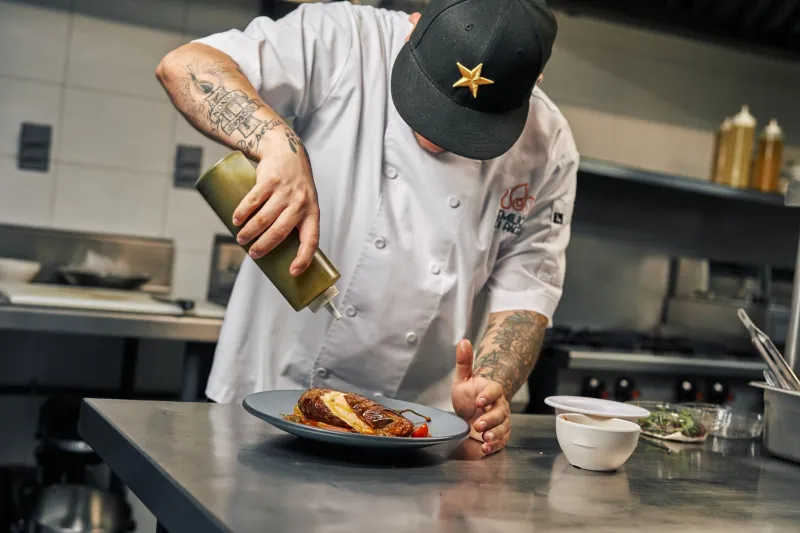
Every year, the culinary leadership at Jay's Restaurant Group undertakes a structured review of what they call the "ingredient horizon"—a forward-looking assessment of what is emerging from farms, forests, and artisan producers across the country and, selectively, abroad. The process is rigorous: chefs submit proposals, sourcing partners are consulted, and test kitchen sessions are conducted over weeks before any new element reaches a guest's plate.
This year's cohort of additions is, by any measure, one of the most compelling in recent memory. Five ingredients in particular have generated significant enthusiasm among Jay's executive chefs—not because they are exotic for the sake of novelty, but because each one carries a genuine story and a culinary logic that elevates the dishes it inhabits.
1. Bloody Butcher Corn: A Heritage Grain With a History
Bloody Butcher is an open-pollinated heirloom corn variety with roots tracing back to early nineteenth-century Appalachia. Its deep crimson kernels and complex, slightly smoky flavor profile have made it a subject of fascination among chefs seeking alternatives to commodity grain products. At Jay's, it arrives via a small family operation in western Virginia that has been cultivating the variety for three generations.
The applications at Jay's have been deliberately restrained. One executive chef has incorporated a stone-milled Bloody Butcher polenta into a composed dish alongside a slow-braised heritage pork shoulder, allowing the grain's natural sweetness and earthiness to anchor the plate. Another location is using it in a housemade flatbread that accompanies the cheese course.
"What draws me to Bloody Butcher is that it resists being neutral," says one of Jay's senior chefs. "It insists on being noticed. That quality demands that everything around it be equally intentional."
2. Ramps: Foraged, Fleeting, and Fiercely Local
Ramps—wild leeks native to the Appalachian region and parts of the upper Midwest—are not new to American fine dining, but Jay's approach to them this year reflects a deeper commitment to foraging ethics and hyper-seasonal sourcing. The group works exclusively with certified sustainable foragers who harvest ramps in quantities that allow populations to regenerate naturally.
The brevity of ramp season, typically a matter of weeks in early spring, is precisely what makes them valuable within Jay's culinary philosophy. They cannot be stockpiled or approximated. Their presence on the menu is a genuine signal of place and time.
This year, Jay's chefs have explored lacto-fermented ramp leaves as a condiment, ramp oil cold-pressed in-house, and a ramp-forward broth used as the base for a delicate spring vegetable consommé. Each preparation honors the ingredient's assertive, garlicky character without overwhelming it.
3. Koji-Aged Proteins: Ancient Fermentation Meets Modern Precision
Koji—the mold Aspergillus oryzae—has been central to Japanese culinary tradition for centuries, forming the biological foundation of miso, sake, and soy sauce. At Jay's, it is now being applied to dry-aging proteins in ways that produce results that neither conventional dry-aging nor traditional marinades can replicate.
The process involves coating proteins—currently a dry-aged beef rib section and a heritage duck breast—with a koji paste and allowing enzymatic activity to tenderize and flavor the meat over a controlled period. The result is a depth of umami character and a textural quality that diners consistently describe as remarkable, even if they cannot immediately identify the source.
"Koji does not announce itself," notes one Jay's chef who spent time studying the technique in Japan before joining the group. "It simply makes everything more fully itself. That is a quality we find deeply compatible with how we think about cooking."
4. Pawpaw: America's Forgotten Tropical Fruit
The pawpaw (Asimina triloba) is North America's largest indigenous fruit, native to the eastern United States, and yet it remains almost entirely absent from mainstream American cuisine. Its custard-like texture and flavor—often described as a cross between banana, mango, and vanilla—make it a compelling candidate for dessert applications, though its extreme perishability has historically made it commercially impractical.
Jay's has partnered with a small orchard in Ohio to receive pawpaws at peak ripeness during their brief late-summer window. The culinary team works quickly, processing the fruit into purées, semifreddo bases, and a striking sorbet that has become one of the most-discussed items on the fall tasting menu at several locations.
"Most of our guests have never tasted a pawpaw," acknowledges one pastry chef. "That moment of genuine surprise—of encountering something completely unfamiliar that also feels somehow native and right—is exactly the kind of experience we want to offer."
5. Smoked Black Cardamom: A Spice With Structural Ambition
Black cardamom, dried over open flame and thus possessing a camphor-like, intensely smoky character quite unlike its green counterpart, has long been a cornerstone of South Asian and Chinese cuisines. At Jay's, it is being employed not as a nod to global fusion but as a structural spice—one that adds depth, complexity, and a faintly resinous quality to preparations that might otherwise read as straightforward.
Applications this year include a black cardamom–infused lamb jus, a smoked cardamom caramel accompanying a dark chocolate tart, and a house-blended dry rub for wood-roasted beet preparations at one vegetable-forward Jay's concept.
The spice functions, in the hands of Jay's culinary teams, as a kind of atmospheric element—something that shifts the character of a dish without dominating it, adding what one chef describes as "the sense that something interesting happened before the plate arrived at the table."
The Principle Behind the Pantry
What unites these five ingredients is not trendiness—several of them are, in fact, deeply historical. What unites them is intentionality: each was selected because it offers something genuine, something that resists easy substitution, and something that rewards the curious diner willing to encounter it without preconceptions. That, at Jay's Restaurant Group, is the only standard that matters.