After the Last Table: The Unseen Hours That Sustain Excellence at Jay's Restaurant Group
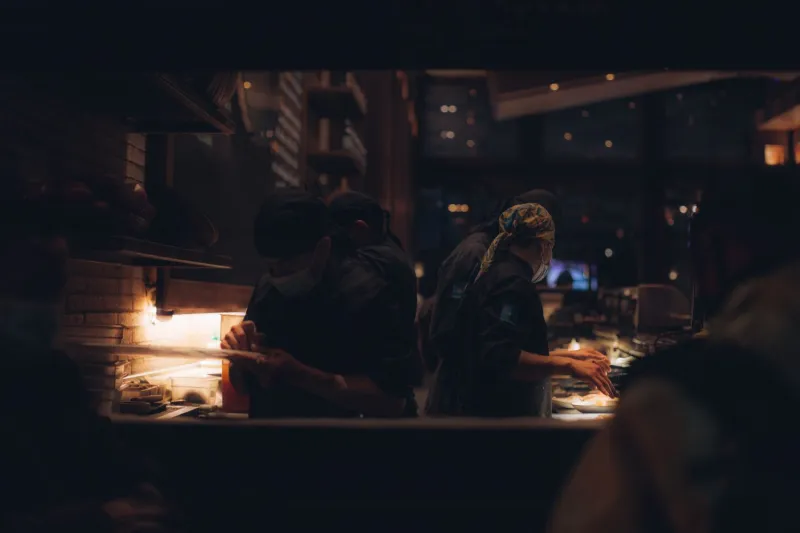
By the time a Jay's Restaurant Group dining room falls quiet—candles extinguished, music silenced, the last linen folded—most guests are already home, perhaps still savoring a memory of the evening. What they do not see, and what very few people outside the industry fully appreciate, is that the restaurant itself is only just entering one of its most demanding phases.
The post-service hours at a Jay's property are not a wind-down. They are, in the clearest sense, the foundation upon which every subsequent service is built.
The Debrief: Where Excellence Is Examined
Within fifteen minutes of the last table's departure, the floor management team convenes for what is known internally as the "service review." This is not a casual conversation. It is a structured, candid examination of every significant moment from the evening—what succeeded, what fell short of expectation, and why.
General managers lead these sessions with a deliberate combination of rigor and psychological safety. The goal is not to assign blame but to extract learning. A dish that was returned to the kitchen, a reservation timing issue that created an uncomfortable wait, a moment when a server's instinct led to an unexpectedly meaningful guest interaction—all of it is examined with equal seriousness.
"The debrief is where our standards actually live," says one general manager with more than a decade of experience within the group. "Anyone can write a standard on paper. The question is whether your team is actively thinking about it at eleven o'clock at night when they are tired and want to go home. Ours are."
These sessions typically run between twenty and forty minutes, and their output—key observations, recurring issues, standout performances—is documented and shared with culinary leadership and the group's regional directors.
The Kitchen After Service: Ritual and Rigor
While the floor team conducts its review, the kitchen is engaged in a parallel process that is, if anything, even more exacting. The mise en place breakdown—the systematic dismantling and reassessment of every station's setup—is conducted according to protocols developed over years of operational refinement.
Every container is labeled and dated with precision. Proteins are assessed for quality and stored according to temperature specifications that exceed regulatory minimums. Stocks and sauces are evaluated for consistency, with any batch that does not meet the kitchen's internal benchmarks discarded rather than carried forward.
This last point deserves emphasis: at Jay's, the decision to discard a preparation that is merely adequate rather than excellent is not exceptional. It is routine. The culture of the kitchen does not accommodate the logic of "it's close enough." Close enough, within these walls, is a category that does not exist.
"We have thrown out stocks that I personally spent eight hours on because they were not right," recalls one sous chef. "That used to feel wasteful to me. Now it feels like the only honest choice."
Equipment Care as a Form of Craftsmanship
The tools of a professional kitchen are, in the hands of Jay's culinary teams, treated with a seriousness that approaches reverence. The post-service period includes comprehensive equipment maintenance routines that go well beyond standard sanitation requirements.
Knives are honed and, on a rotating schedule, professionally sharpened. Cooking surfaces are inspected for calibration. Refrigeration units are checked for temperature accuracy. Smallwares are assessed for wear, and anything showing signs of degradation is removed from service and replaced.
This attention to equipment is not mere fastidiousness. It reflects a genuine understanding that the quality of the tool shapes the quality of the result. A poorly calibrated oven does not simply produce inconsistent results—it undermines the chef's ability to execute with confidence, and that uncertainty eventually reaches the plate.
Continuous Training in the Quiet Hours
Perhaps the least expected element of the post-service period at Jay's is the frequency with which it is used for active skill development. On two evenings per week at most locations, a portion of the post-service time is devoted to structured training exercises for kitchen staff.
These sessions are not remedial. They are aspirational. A chef de partie might spend forty-five minutes working through a new butchery technique with a more senior colleague. A pastry cook might practice a specific tempering method until the results are consistent across a dozen repetitions. A front-of-house team member might spend time with the sommelier reviewing the current wine list's regional context.
"We are always asking our guests to trust us," says one executive chef. "That trust has to be earned, and it is earned in these moments—not in the moments when the dining room is full and the adrenaline is running. It is earned here, in the quiet, when nobody is watching."
The Pre-Opening Ritual: Closing the Loop
The final act of the post-service period is, in a sense, the beginning of the next one. Before the kitchen team disperses for the night, a preliminary mise en place list is drafted for the following day's service. Prep priorities are identified, product orders are confirmed, and any special accommodations required by upcoming reservations are noted and assigned.
This closing ritual ensures that the team arriving for the next day's prep shift does not begin in a state of uncertainty. They arrive to a kitchen that has been left in a condition of readiness—clean, organized, and oriented toward what comes next.
It is, in miniature, a reflection of Jay's Restaurant Group's broader philosophy: that excellence is not an event. It is a continuous practice, sustained by people who understand that the work of hospitality never truly concludes—it only pauses, briefly, before beginning again.