Beyond the Order Pad: How Jay's Restaurant Group Is Shaping the Future of American Hospitality
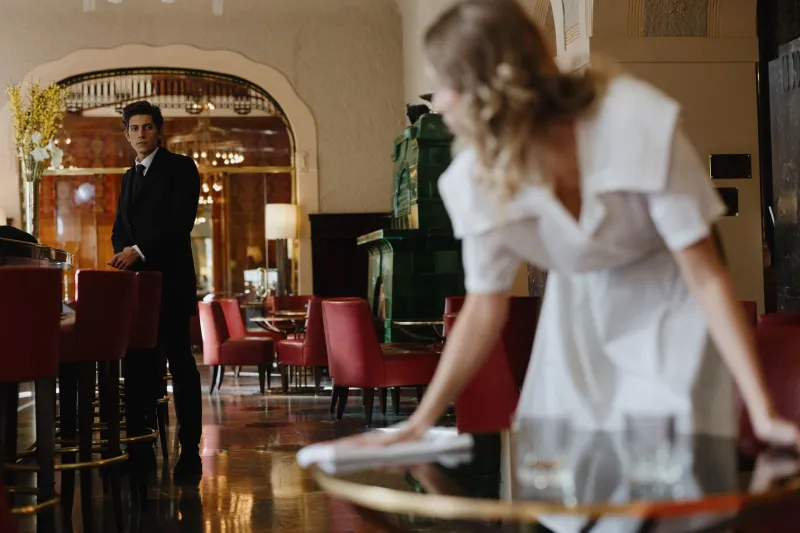
There is a moment, familiar to anyone who has worked a busy dinner service, when the dining room reaches a particular kind of equilibrium. Tables are full, conversations are flowing, and the kitchen is humming with quiet urgency. In that moment, the difference between a good restaurant and a truly memorable one has almost nothing to do with the food. It has everything to do with the people moving through it.
At Jay's Restaurant Group, that understanding is not merely an observation—it is the foundational premise of how every member of the service team is recruited, developed, and ultimately empowered to grow.
A Different Kind of Orientation
Most hospitality onboarding programs focus on the mechanics: how to carry plates, how to enter orders into the point-of-sale system, how to upsell the evening's specials. Jay's Restaurant Group begins in a different place entirely.
New hires across all of the group's dining concepts spend their first days not on the floor, but in what the organization refers to internally as the Foundation Sessions—a structured immersion into the philosophy, history, and values that animate every corner of the operation. Employees learn about the sourcing relationships that bring ingredients from regional farms to the kitchen. They are introduced to the executive culinary team and given a frank account of how each menu is conceived. They visit the dining room not as workers, but as guests.
"We want every person on our team to understand what it actually feels like to sit in one of our chairs," says one of the group's senior training directors. "If you've never experienced what we're asking our guests to experience, you're working from an abstraction. We don't want abstractions. We want genuine understanding."
This intentional inversion—placing empathy before efficiency—sets the tone for everything that follows.
Mentorship as Infrastructure
Once the Foundation Sessions conclude, new service staff are paired with a senior team member for an extended period of guided practice. This pairing is not incidental. The group's leadership treats mentorship as a structural element of the organization, as essential as scheduling or inventory management.
Mentors at Jay's Restaurant Group are selected through a formal process that evaluates not only their technical proficiency, but their capacity to communicate, reflect, and adapt. Being a strong server does not automatically qualify someone to guide a newer colleague. The ability to articulate why a particular approach works—and to adjust that explanation based on how the other person learns—is considered equally important.
The mentor-mentee relationship typically spans the first three months of employment, though many of these professional bonds extend well beyond that initial period. Former mentees frequently describe their mentors as pivotal figures in their careers, individuals who helped them understand that hospitality is not a placeholder job but a genuine vocation with its own discipline and craft.
Reading the Room: The Invisible Curriculum
Among the most sophisticated elements of Jay's training philosophy is what might be called the invisible curriculum—the set of skills that no manual can fully capture, but that separate competent service from truly exceptional hospitality.
This curriculum includes the ability to read a table's emotional temperature: recognizing when guests want attentive engagement and when they prefer to be left undisturbed. It includes knowing how to recover gracefully from an error without drawing undue attention to it. It includes the capacity to remember not just what a returning guest ordered, but the small details—a preference for a quieter corner, a particular way they take their coffee—that communicate to a guest that they are known and valued.
These capabilities are cultivated through a combination of role-playing exercises, post-shift debriefs, and what the group calls the Observation Practice: a structured exercise in which team members spend a portion of their early weeks simply watching experienced colleagues work, followed by a guided conversation about what they noticed.
"There's an enormous amount of information moving through a dining room at any given moment," one longtime floor manager explains. "We're teaching people to receive that information and respond to it thoughtfully, not reflexively. That takes time, and it takes a certain kind of attention. We build that attention deliberately."
Advancement as a Promise Kept
Jay's Restaurant Group is explicit about something that many hospitality organizations leave implicit: the expectation that talented, committed service professionals will advance. The group maintains a clear internal pathway from host and support roles through server positions, to lead server designations, and ultimately to floor management and training roles.
This transparency serves a practical purpose. When employees understand that their current position is a step rather than a ceiling, their relationship to their work shifts. Hosts who might otherwise view their role as peripheral begin to engage with it as a developmental opportunity. Bussers and food runners—positions that some organizations treat as interchangeable labor—are recognized at Jay's as essential participants in the dining experience, and they are trained accordingly.
The group also invests in continuing education for its more experienced staff, offering access to wine certification programs, culinary tours, and industry conferences. These investments communicate something important: that the organization sees its people as professionals worthy of professional development, not simply as labor to be managed.
The Multiplier Effect
What Jay's Restaurant Group has built, over years of intentional effort, is something that resists easy quantification but is nonetheless very real: a culture in which excellence is understood to be contagious. When a senior team member models genuine care for a guest, newer colleagues observe that behavior and internalize it. When leadership celebrates a server who turned a difficult situation into a moment of genuine connection, it reinforces the values the organization claims to hold.
This multiplier effect is, in many ways, the true measure of the group's training philosophy. Individual skills can be taught in a matter of weeks. A culture of hospitality—one in which every person in the building, regardless of title, understands their role as an architect of the guest experience—takes years to build and requires constant, deliberate maintenance.
At Jay's Restaurant Group, that work is never considered finished. It is, rather, the ongoing project at the center of everything the organization does. The dining room, after all, is only as extraordinary as the people who tend to it.