Cultivating Trust: The Agricultural Partnerships That Define Every Dish at Jay's Restaurant Group
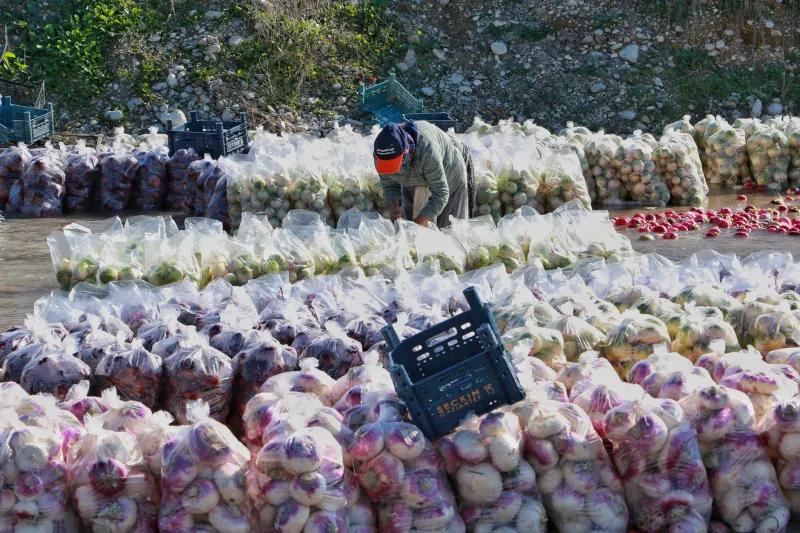
Long before a guest settles into a chair at any of Jay's Restaurant Group's dining concepts, a different kind of work is already well underway. Somewhere in the rolling fields of the Pacific Northwest, a family-owned farm is harvesting heirloom tomatoes. Across the country in the Texas Hill Country, a rancher is tending to heritage-breed cattle raised on open pasture. And in the artisan cheese caves of Vermont, a small producer is aging wheels of raw-milk cheddar destined for one of our seasonal menus. The culinary experience our guests enjoy is, in every meaningful sense, the product of these relationships—long-cultivated, carefully maintained, and deeply valued.
At Jay's Restaurant Group, we do not regard our supplier network as a logistical necessity. We regard it as a living expression of our values.
Building Relationships Before Building Menus
The process of establishing a supplier partnership at Jay's Restaurant Group begins not with a contract, but with a conversation. Our culinary leadership team makes it a priority to visit prospective agricultural partners in person—walking fields, touring facilities, and sitting at kitchen tables with the people who do the work. This investment of time reflects a core belief: that understanding how an ingredient is produced is inseparable from understanding how it should be prepared.
"We don't reach out to a farm because we need a product," explains one of Jay's senior culinary directors. "We reach out because we've heard something compelling about how they operate—how they treat the land, how they treat their animals, what they're trying to accomplish. The ingredient is almost secondary at that point."
This philosophy has guided the organization's sourcing approach for years, resulting in a supplier network that spans more than two dozen states and includes producers ranging from small family operations to mid-scale regional cooperatives.
The Farmers Behind the Flavors
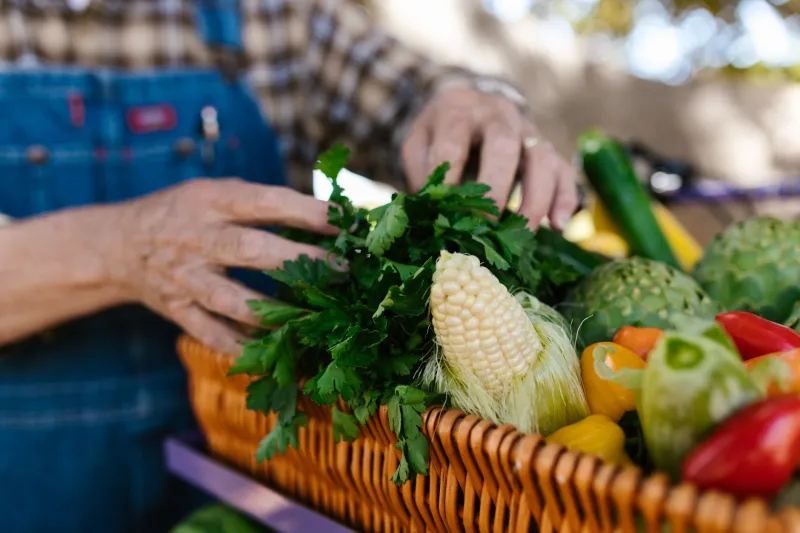
Among the most enduring of Jay's agricultural partnerships is one with a fourth-generation vegetable farm in California's Central Valley. The farm has supplied Jay's West Coast concepts with specialty greens, root vegetables, and edible flowers for nearly a decade. According to the farm's proprietor, the relationship has evolved well beyond a standard buyer-seller arrangement.
"They send their chefs out here before the season starts," she says. "They want to know what's coming in strong, what we're experimenting with, what we're excited about. And then they build around that. It's collaborative in a way that most of our restaurant relationships aren't."
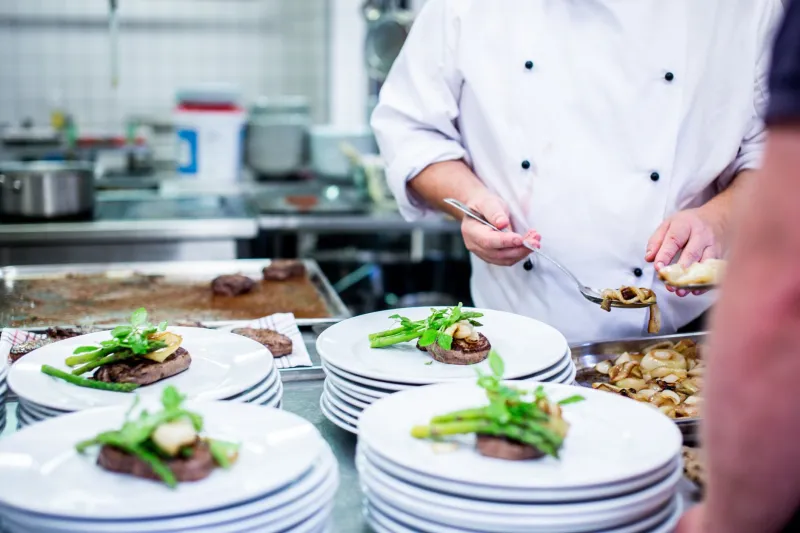
This kind of seasonal dialogue directly shapes the menus guests encounter at Jay's dining concepts throughout the year. Rather than designing a fixed menu and sourcing ingredients to match, our culinary teams work in close coordination with producers to let availability, quality, and seasonality guide the creative process. The result is a menu that is, by design, never entirely static—and always reflective of what the land is currently offering at its best.
A similar dynamic exists with a heritage pork producer in the Midwest, whose pasture-raised Berkshire hogs have become a signature ingredient across several of Jay's protein-forward concepts. "They've never once asked me to cut corners," the rancher notes. "They want the animal raised right, and they're willing to pay for that. That kind of customer changes the way you think about your business."
Supporting Regional Economies Through Intentional Sourcing
The impact of Jay's supplier relationships extends well beyond the plate. By committing to regional producers and prioritizing long-term agreements over opportunistic purchasing, the organization plays a meaningful role in supporting agricultural communities across the United States.
In practical terms, this means that a portion of every guest's dining experience at Jay's Restaurant Group contributes directly to the economic vitality of American farms and rural producers. Our procurement team works deliberately to ensure that sourcing decisions account not only for quality and consistency, but also for the broader economic context of the communities from which ingredients are drawn.
This approach is particularly evident in our engagement with small and emerging producers. Jay's Restaurant Group has, on several occasions, entered into early-stage partnerships with farms that were not yet operating at the scale required to supply a national restaurant group—providing the demand stability needed for those operations to grow. Several of our most valued current suppliers began as exactly these kinds of developmental relationships.
Consistency Without Compromise
One of the more complex challenges inherent in farm-to-table sourcing at scale is maintaining consistency across multiple dining concepts in different regions of the country. A guest dining at a Jay's concept in Chicago and another dining at a sister concept in Charleston should encounter the same standard of quality—even when the ingredients on each plate originate from entirely different producers.
Achieving this requires both rigorous quality standards and a genuine understanding of what consistency actually means in the context of natural ingredients. Unlike industrially produced commodities, farm-sourced products carry natural variation. A heirloom carrot will not look precisely the same from one harvest to the next. A grass-fed beef cut will have characteristics that shift with the seasons.
Our culinary teams are trained not to resist this variation, but to work with it—adjusting preparation techniques, cooking times, and flavor pairings as needed to honor the ingredient in its current form. Consistency, in this context, is not about uniformity. It is about the unwavering commitment to quality and intention that governs every decision made in our kitchens.
A Partnership, Not a Transaction
Perhaps what distinguishes Jay's Restaurant Group's approach to agricultural sourcing most clearly is the genuine mutuality at the center of each relationship. Our producers are not vendors. They are partners whose expertise, judgment, and dedication we rely upon and respect.
This is reflected in the way we communicate—with transparency about our needs, honesty about our constraints, and openness to the knowledge our producers bring to the table. It is reflected in our willingness to adjust purchasing plans when a harvest is difficult, and in our ongoing efforts to share feedback that helps producers refine and improve their offerings over time.
"They treat us like we matter to them," says one artisanal cheese producer in Wisconsin who has supplied Jay's concepts for several years. "And because of that, we treat their order like it matters to us. That's just how it works when the relationship is real."
At Jay's Restaurant Group, we believe that exceptional dining begins long before the first course arrives. It begins in a field, on a ranch, or in an aging room—with the hands and the knowledge of the people who have dedicated themselves to producing something extraordinary. Our role is to honor that work at every stage of the journey from producer to plate, and to ensure that the trust placed in us by our agricultural partners is always worthy of the trust they have earned from us.
The relationships we have built with local producers across America are not a feature of our dining concepts. They are the foundation upon which every concept rests.