Rooted in Region: The Sourcing Story Behind Every Plate at Jay's Restaurant Group
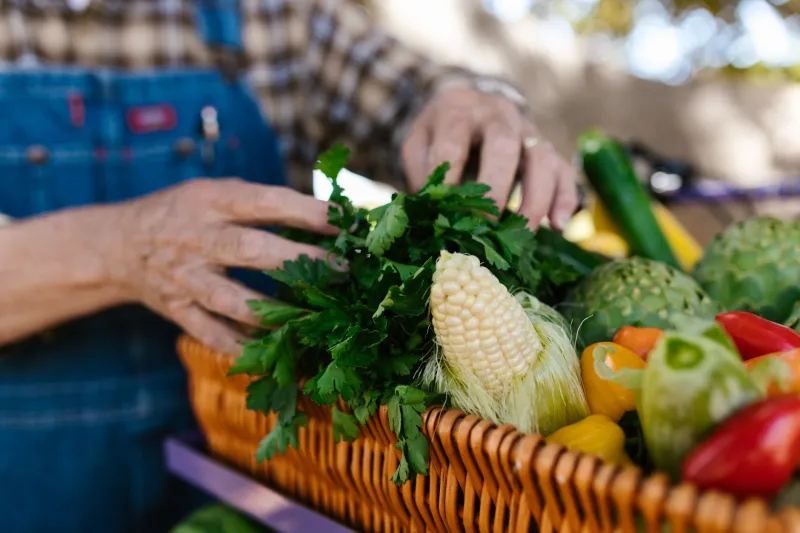
There is a moment, familiar to anyone who has dined at one of our restaurants, when a dish arrives and something feels unmistakably right — a depth of flavor that transcends technique, a freshness that no amount of culinary skill alone can manufacture. That quality is not accidental. It is the direct result of a sourcing philosophy that Jay's Restaurant Group has refined over years of building genuine partnerships with the farmers, ranchers, fishers, and artisans who sustain American food culture.
Our approach is neither uniform nor formulaic. Because each of our dining concepts occupies a distinct culinary identity and geographic footprint, our sourcing strategy is equally differentiated — shaped by the land, the season, and the communities that surround each location.
A Philosophy Grounded in Place
The guiding principle behind our sourcing model is straightforward: the best ingredient for any dish is almost always the one grown or raised closest to where it will be served. This is not nostalgia or trend-chasing. It is a practical acknowledgment that proximity preserves integrity. Produce harvested at peak ripeness and delivered within hours retains a vitality that long-haul refrigerated transport simply cannot replicate.
Jay's Restaurant Group maintains what our culinary leadership team refers to as a "regional radius" for each location — a geographic boundary within which we prioritize supplier relationships before looking further afield. For our properties in the Mid-Atlantic, that radius encompasses the fertile farmlands of Pennsylvania, Maryland, and Virginia. For our Gulf Coast locations, it extends into the bayous of Louisiana and the shrimp-rich waters off the Texas coast. Each radius reflects ecological reality rather than arbitrary boundaries.
Concept-Specific Sourcing: One Group, Many Approaches
Perhaps the most distinctive aspect of our model is how dramatically sourcing practices vary across our portfolio of dining concepts.
Our flagship fine dining establishments operate under the most exacting standards, with executive chefs maintaining direct, personal relationships with individual farmers. At several of these locations, chefs participate in seasonal planning conversations with growers before the planting season begins — effectively co-designing the menu months in advance based on what the land will yield. This level of integration means that a spring menu is not assembled from a catalog; it emerges organically from conversations about heirloom tomato varieties, heritage grain harvests, and anticipated stone fruit windows.
Our more casual concepts take a different but equally intentional approach. Rather than bespoke farm relationships, these locations work with regional food hubs and cooperative distributors that aggregate supply from dozens of small and mid-sized producers. This model allows our higher-volume venues to maintain local sourcing standards without placing unsustainable demand on any single farm operation. The result is a supply chain that is both resilient and genuinely community-centered.
Profiles in Partnership: The Producers Behind the Menu
Behind every sourcing philosophy are real people whose work makes it possible. Jay's Restaurant Group takes pride in the relationships we have cultivated with producers across the country.
In the Pacific Northwest, our Seattle-area locations partner with a fourth-generation oyster operation whose beds have been cultivated in Puget Sound for nearly a century. The salinity and mineral character of those waters produce a flavor profile that our culinary team considers irreplaceable — and that our guests have come to expect.
In the heartland, our Midwest properties source heritage pork from a cooperative of small-scale hog farmers in Iowa who raise their animals on open pasture without the use of growth-promoting additives. The difference in texture and fat marbling is immediately apparent to anyone who has tasted a properly cured chop from one of these animals alongside a commodity alternative.
Along the Eastern Seaboard, we work with a network of specialty vegetable growers who focus exclusively on varieties selected for flavor rather than shelf stability or visual uniformity. Odd-shaped carrots with extraordinary sweetness, bitter greens that no major distributor would accept for cosmetic reasons, and dry-farmed tomatoes that concentrate their sugars in ways that irrigated counterparts cannot — these are the ingredients that give our menus their character.
Supporting the Agricultural Ecosystem
Our sourcing commitments carry consequences that extend well beyond the dining room. When Jay's Restaurant Group enters a supplier relationship, we do so with the intention of longevity. We pay fair market rates — and frequently above them — because we understand that the financial viability of small American farms is itself an ingredient in what we serve. A farm that cannot sustain its operation cannot supply us next season, or the season after that.
We also work to reduce the friction that small producers often face when attempting to supply large hospitality groups. Our procurement teams are trained to accommodate the realities of small-farm logistics: variable harvest volumes, seasonal gaps, and the occasional crop loss that comes with working within natural systems rather than against them. Flexibility on our part is an investment in the durability of these partnerships.
Additionally, several of our properties participate in regional agricultural initiatives, including programs that support beginning farmers and efforts to preserve farmland from commercial development. We view these engagements not as philanthropy but as infrastructure investment — ensuring that the agricultural landscape that supplies us today remains productive for the next generation of growers.
Transparency at the Table
We believe our guests deserve to know where their food originates, and we have made supplier recognition a consistent feature of our dining experience. Menus across our portfolio identify key local producers by name. Our service teams are trained to speak knowledgeably about sourcing when guests inquire. At select locations, we publish seasonal sourcing maps that illustrate, geographically, the origins of primary ingredients on the current menu.
This transparency is not performative. It reflects our belief that the relationship between diner and producer — even when mediated by a restaurant — is a meaningful one, and that acknowledging it enriches the experience of the meal itself.
The Ongoing Work
Local sourcing at scale is not a problem that is ever fully solved. It requires continuous attention, adaptation, and honest assessment of where we fall short of our own standards. Supply disruptions, seasonal variability, and the practical limits of regional availability mean that we do not always achieve the geographic proximity we aim for. When we cannot, we are direct about it — with ourselves and with our guests.
What we can say with confidence is that the pursuit itself shapes everything we do. From the conversations our chefs have with farmers in early spring to the way our menus evolve with the harvest calendar, Jay's Restaurant Group is committed to a vision of American dining that honors the land, the people who tend it, and the communities in which we are privileged to operate.
We invite you to taste the difference that commitment makes — at a table near you.