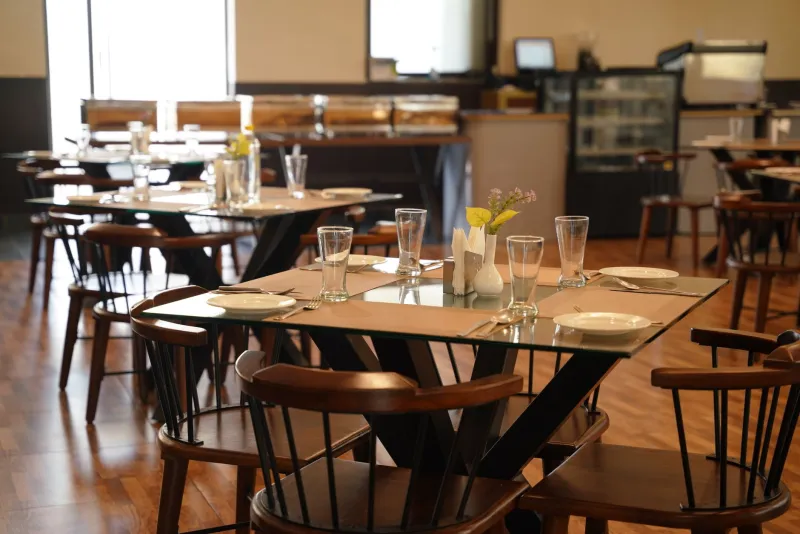
Heard and Unheard: The Acoustic Philosophy Shaping Every Jay's Dining Room
There is a particular kind of discomfort that most American diners have experienced at least once: leaning across a table, straining to hear a companion speak, while the ambient roar of a crowded restaurant swallows every word. It is a frustration so common that it has come to feel inevitable — as though noise were simply the price of a lively establishment. At Jay's Restaurant Group, that assumption is rejected entirely.
Sound, in the view of Jay's leadership, is not a byproduct of hospitality. It is an ingredient in it. And like every other ingredient that enters a Jay's kitchen or dining room, it is treated with deliberate, uncompromising attention.
The Overlooked Dimension of Fine Dining
When guests evaluate a restaurant experience, they tend to speak in the language of flavor, presentation, and service. Rarely do they articulate the role that sound played in shaping their evening — and yet acoustic researchers and hospitality designers consistently find that noise levels are among the most significant predictors of guest satisfaction and perceived food quality.
Studies conducted in the field of sensory science have demonstrated that elevated ambient noise not only makes conversation difficult, but actively alters the way people taste. High decibel environments tend to suppress the perception of sweetness and umami while amplifying the experience of crunchiness. In practical terms, a noisy room can undermine the precise work of an executive chef before a single fork is lifted.
Jay's Restaurant Group has long understood this relationship. From the earliest stages of each location's design process, acoustic performance is treated as a non-negotiable criterion — one that informs everything from ceiling height and surface materials to furniture selection and spatial configuration.
Designing for Quiet Without Designing for Silence
It is worth drawing a careful distinction here. The goal at Jay's is not to engineer silence. A dining room stripped of ambient warmth can feel clinical, even isolating — the acoustic equivalent of a white wall. What Jay's pursues instead is intentional sound: an environment calibrated so that conversation flows naturally at a comfortable volume, background music registers as a presence rather than an intrusion, and the cumulative energy of a full room never tips into cacophony.
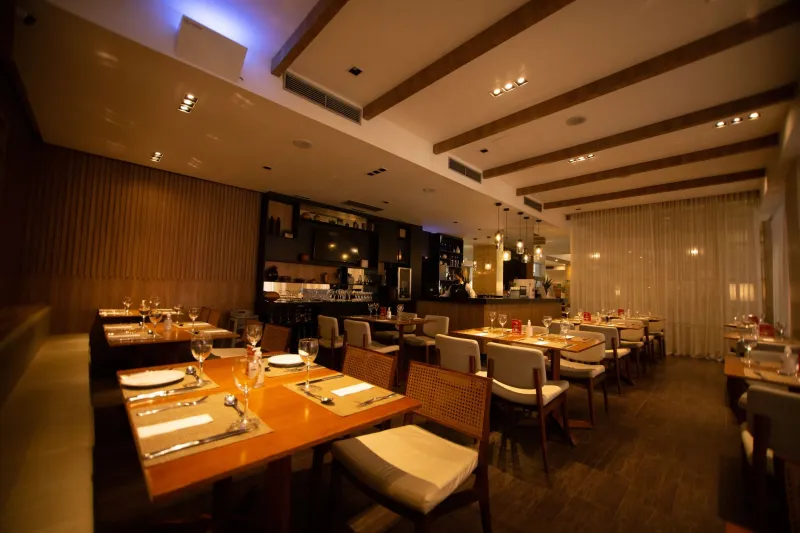
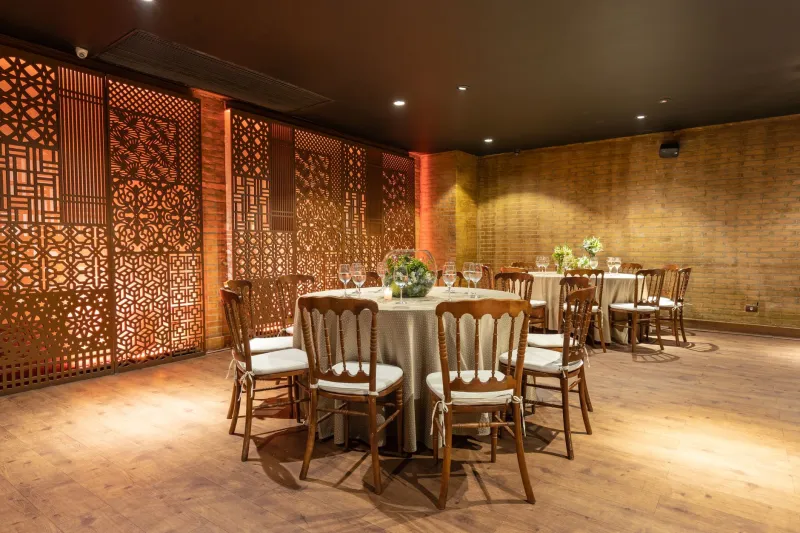
This calibration begins with the architecture itself. Soft, sound-absorbing materials — upholstered seating, fabric wall panels, carpeted or padded flooring — are introduced not merely for visual warmth but to reduce the reflective surfaces that cause sound to bounce and accumulate. High ceilings, while visually dramatic, can create reverberant chambers that amplify ambient noise; Jay's design teams work carefully with acoustic consultants to offset this effect through strategic placement of baffles, drapery, and textured surfaces that interrupt sound waves before they compound.
Table spacing is another instrument in this process. The temptation in any successful restaurant is to maximize covers — to seat as many guests as possible in a given footprint. Jay's resists this pressure. Generous spacing between tables serves a dual purpose: it preserves the privacy of individual conversations while preventing the social escalation effect, wherein guests at neighboring tables unconsciously raise their voices to be heard over one another, triggering a chain reaction that pushes the entire room toward an uncomfortable volume ceiling.
Music as Architecture
The role of music in a Jay's dining room is similarly intentional. Volume and tempo are not set arbitrarily or left to the discretion of individual staff members. Each location operates within established parameters that reflect both the concept's identity and the acoustic properties of the physical space.
Tempo, in particular, carries measurable consequences. Research in hospitality psychology has consistently shown that faster music accelerates the pace at which diners eat and drink, while slower tempos encourage guests to linger, savor, and engage more deeply with their companions and their meal. At Jay's, where the architecture of a dining experience is understood as a deliberate progression from arrival to final course, music selection is an extension of that architecture — a quiet hand guiding the rhythm of the evening without ever calling attention to itself.
Playlist curation is handled at the corporate level, with input from each location's culinary and front-of-house leadership. The result is a sonic identity that is consistent enough to feel like a Jay's experience while remaining responsive to the particular character of each dining concept within the group.
The Human Element
No acoustic intervention, however sophisticated, eliminates the need for attentive human management. Jay's front-of-house teams are trained to monitor the sound environment throughout service, adjusting music levels in response to room occupancy and flagging conditions that may require intervention. A dining room at thirty percent capacity sounds fundamentally different from one at full occupancy, and the calibrations that serve the former will not serve the latter.
This attentiveness extends to the placement of guests themselves. Experienced hosts at Jay's locations understand that seating decisions carry acoustic implications. A party seeking a quiet, intimate dinner is not placed adjacent to a large celebratory table. Guests who have indicated hearing difficulties are offered seating away from the kitchen pass or service stations where ambient activity peaks during busy service periods.
These are not extraordinary measures. They are, in Jay's view, simply what hospitality requires when it is practiced with genuine care.
What Guests Feel, Even When They Cannot Name It
Perhaps the most telling evidence of acoustic design's impact is the difficulty guests have in articulating it. When a Jay's dining experience is described as warm, intimate, or somehow more refined than comparable establishments, sound is rarely cited explicitly — and yet it is almost always present as a contributing factor. Guests leave feeling that they were truly able to connect with their companions, that the meal unfolded at a pace that felt right, that the environment worked in their favor rather than against them.
This is, in many ways, the highest aspiration of the discipline: to shape experience so thoroughly and so invisibly that the craft disappears into the pleasure it creates.
At Jay's Restaurant Group, the science of sound is pursued not for its own sake, but in service of something older and more essential — the belief that a great meal is never just about what arrives on the plate. It is about everything that surrounds it: the light, the space, the company, and yes, the quiet that makes all of it possible.