Decoding the Menu: How to Read a Jay's Wine and Cocktail List Like a Sommelier
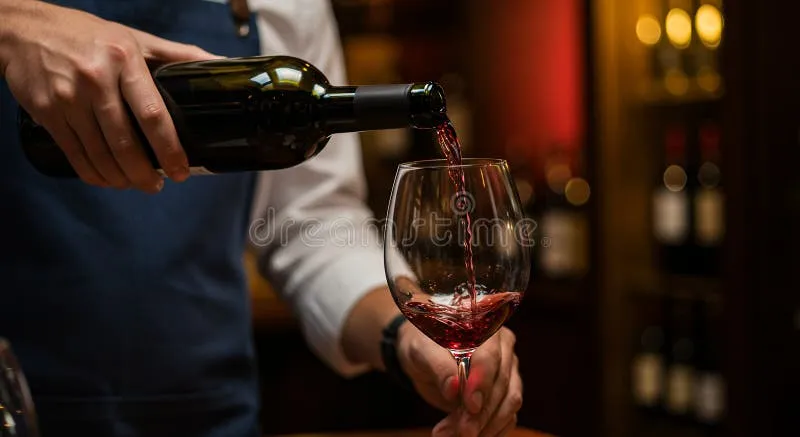
Photo: sommelier pouring red wine into glass restaurant, via thumbs.dreamstime.com
Every beverage director will tell you the same thing: the most expensive bottle on the list is rarely the best one for your table. Yet guests order it anyway, guided by the assumption that price equals pleasure. At Jay's Restaurant Group, our beverage teams spend months curating lists designed to prevent exactly that mistake. Here is how to read them the way the people who wrote them intended.
Start With the Structure, Not the Names
A well-built list is organized to answer questions, not to show off. Ours are arranged so that similar styles sit near one another — crisp whites together, food-friendly reds in their own neighborhood, low-intervention bottles given their own shelf. Before scanning for familiar labels, read the section headers. They tell you what the list wants to do with your meal.
If you're dining on our seafood concept's raw bar, for instance, the coastal whites section is doing deliberate work: mineral-driven bottles chosen to sharpen brine rather than compete with it. Ordering by section rather than by brand is the fastest way to sound like a regular.
Ask the Question That Unlocks Everything
Sommeliers love one prompt above all others: "What do you like to drink, and what are you eating?" Not "What's good?" — that question gives them nothing to work with. Name two things you enjoy, even vaguely. "I usually drink Pinot Noir, and I'm having the duck" gives a beverage professional everything needed to steer you somewhere interesting, possibly toward something you've never tried and will remember.
The Underrated Bottles Our Team Wishes You'd Order
Every Jay's list carries quiet champions — bottles our directors stock with genuine affection and watch, occasionally with heartbreak, go unordered. A few worth seeking out:
- Muscadet (Sèvre et Maine): Often mistaken for a simple seaside white, the best versions age beautifully and pair with anything from oysters to roast chicken. It is frequently the best value on the list.
- Cabernet Franc from the Loire: Brighter and more savory than its Bordeaux cousins. Superb with our tavern's chargrilled plates.
- Dry Rosé from Bandol: Structured enough for a full meal, not just a porch. A favorite of our coastal room's staff.
- ** Grüner Veltliner:** Austria's answer to every "I don't know what to order" table. Peppery, food-flexible, and almost never a wrong choice.
Ask your server which bottle the staff drinks after shift. That answer has never once disappointed us.
Reading the Cocktail List
Our cocktail menus are built the same way as our kitchens: a few classics executed flawlessly, then a handful of signatures that express each room's personality. The flagship's list leans toward spirit-forward elegance — stirred drinks, amaro, restrained sweetness. The tavern's signatures carry smoke and heat. The coastal room favors bright, citrus-led builds with saline finishes.
A professional tip: order the house signature at least once. These drinks are tested for months before they reach a menu, and they're the clearest expression of what each room tastes like in a glass.
Pairing Without Anxiety
Formal pairings are wonderful, but they aren't mandatory. A simpler approach: choose one wine for the whole meal and pick something with moderate alcohol and lively acidity — a village-level white Burgundy, a Loire red, a dry Riesling. Versatility beats precision at almost every American dinner table.
And if a glass arrives and you're unsure? Say so. Every Jay's beverage program would rather replace a glass than leave a guest quietly disappointed. That is not policy. It is the entire point.